
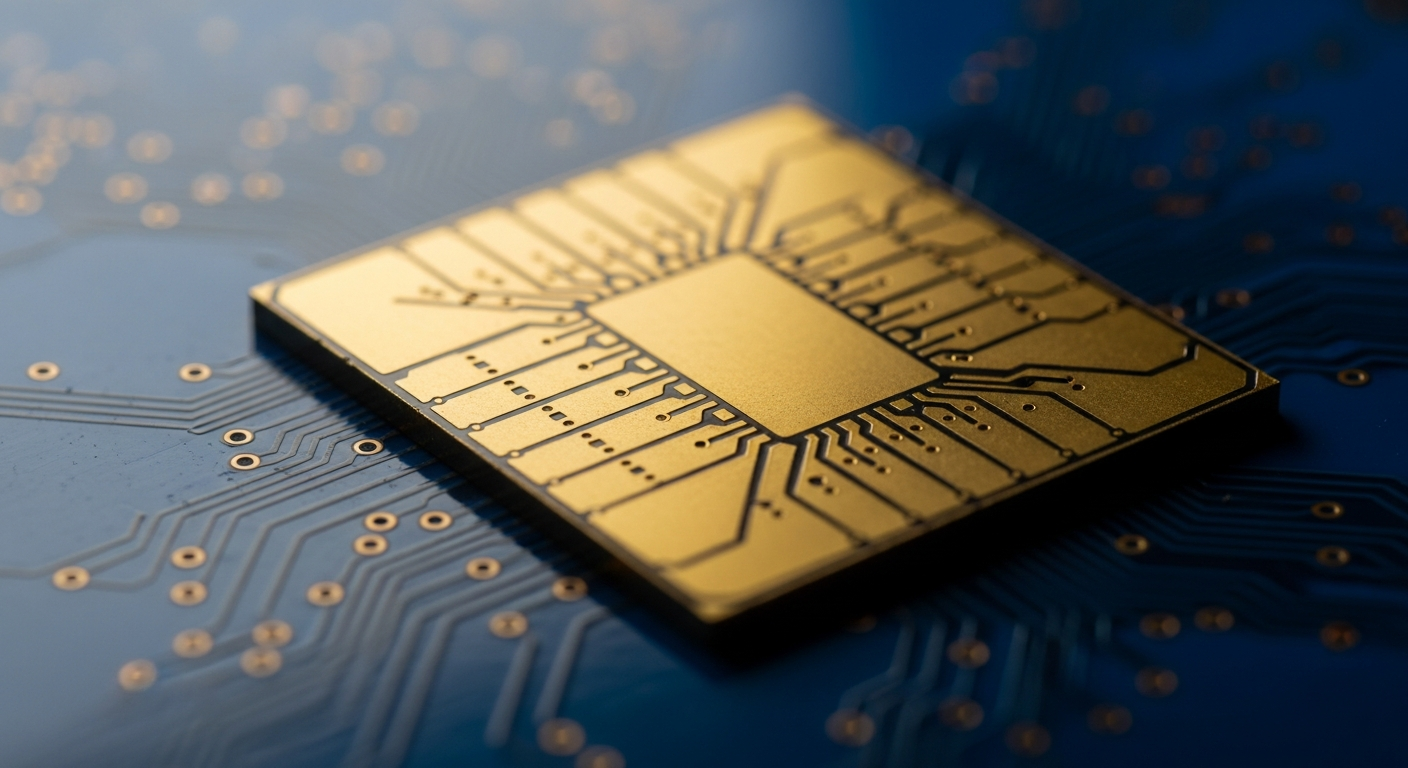
The payment card, in its familiar ISO 7810 ID-1 format, has been the dominant physical payment instrument for decades. But the underlying technology — an NFC chip and antenna that communicates wirelessly with a payment terminal — is not constrained to a rectangular piece of plastic. The same contactless payment capability can be embedded in a wristband, a ring, a watch strap, a key fob, or virtually any object that can accommodate a small chip module and antenna. Welcome to the world of wearable payments.
The Technology Inside
A wearable payment device contains the same core technology as a contactless payment card: a secure element chip (typically certified by Visa, Mastercard, or both) and an antenna tuned to communicate at 13.56 MHz. The chip stores the cardholder's tokenised payment credentials and performs the same cryptographic operations during a transaction as a standard contactless card.
The key engineering challenge is miniaturisation. A standard card has a relatively large surface area (85.6 x 53.98 mm) to accommodate the antenna, and the flat form factor provides a stable electromagnetic coupling surface. A wristband, ring, or key fob has a much smaller and often curved surface, requiring antenna designs that are optimised for the specific form factor. The antenna's performance — its read range, coupling efficiency, and sensitivity to orientation — must be carefully validated for each wearable design.
Wristbands: The Mainstream Form Factor
Payment wristbands are the most commercially mature wearable payment form factor, having been deployed at scale in several use cases. The silicone wristband — comfortable, waterproof, and durable — has become the standard for closed-loop payment applications at events, theme parks, and resorts.
South Africa's major music festivals and sporting events have been early adopters of cashless wristband payment. Festivals like Rocking the Daisies, Oppikoppi, and AfrikaBurn have experimented with cashless systems where attendees load value onto an NFC wristband at the event entrance and tap to pay at food, drink, and merchandise vendors throughout the venue. The benefits are compelling: faster service (a tap transaction takes seconds compared to fumbling with cash), reduced theft risk (no cash on the premises), and rich transaction data that helps event organisers understand spending patterns.
Open-loop payment wristbands — those linked to a Visa or Mastercard account and accepted at any contactless terminal, not just within a closed venue — are the next evolution. Several banks and payment networks have launched open-loop wristband products, and the form factor is gaining traction among consumers who want to pay without carrying a wallet, particularly during exercise, at the beach, or while commuting.
Payment Rings and Key Fobs
Payment rings represent the most discreet wearable payment form factor. A payment ring looks like an ordinary piece of jewellery — a band of ceramic, titanium, or stainless steel — but contains a tiny NFC chip and coiled antenna that enable contactless payments. The form factor is passive (no battery required), waterproof, and virtually indestructible. Companies including K Ring (now part of Digiseq) and McLear have brought payment rings to market, with integration across multiple payment networks.
Key fobs serve a more utilitarian purpose. A payment-enabled key fob attaches to the user's key ring and provides contactless payment capability in a rugged, pocketable format. Key fobs have found particular traction in the fuel payment sector, where drivers can tap their key fob at the fuel pump to pay without removing their wallet.
African Applications
Wearable payment technology has specific applications in the African context that go beyond the consumer convenience angle. In environments where carrying a card or phone is impractical — mining operations, factory floors, agricultural settings — a payment-enabled wristband provides a robust alternative that can withstand dust, moisture, and physical impact while enabling cashless canteen payments, vending machine purchases, and other workplace transactions.
The hospitality sector offers another natural fit. Resorts and game lodges in South Africa, Kenya, and Tanzania are exploring all-inclusive wristband systems where guests wear a payment wristband for the duration of their stay, tapping to pay for spa treatments, bar tabs, gift shop purchases, and activity bookings. The wristband eliminates the need for guests to carry cash, cards, or room keys while moving between pool, restaurant, and activity locations.
Manufacturing Wearables
For card manufacturers, the wearable payment market represents both an opportunity and a capability challenge. The core competency — chip embedding, antenna design, NFC testing, and payment network certification — transfers directly from card manufacturing to wearable production. However, the physical form factors are different, requiring moulding and assembly processes for silicone wristbands, precision machining for metal rings, and injection moulding for key fobs.
At Cardzgroup, we have expanded our manufacturing capabilities to include wearable payment devices, producing NFC wristbands, key fobs, and custom form factors alongside our traditional card products. The underlying technology is the same — a secure element, an antenna, and a commitment to quality — expressed in new and innovative physical formats.
The Future of Form Factors
The wearable payment market is still in its early stages, and the range of form factors will continue to expand. Payment-enabled watch straps, clothing accessories, and even textile-embedded payment chips are in various stages of development. The common thread is the decoupling of payment capability from the traditional card format — the recognition that a payment credential can live in any object that the consumer chooses to carry or wear.
For Africa's vibrant consumer market, wearable payments offer a fusion of technology and personal expression. The way we pay is becoming a lifestyle choice, not just a financial transaction.