
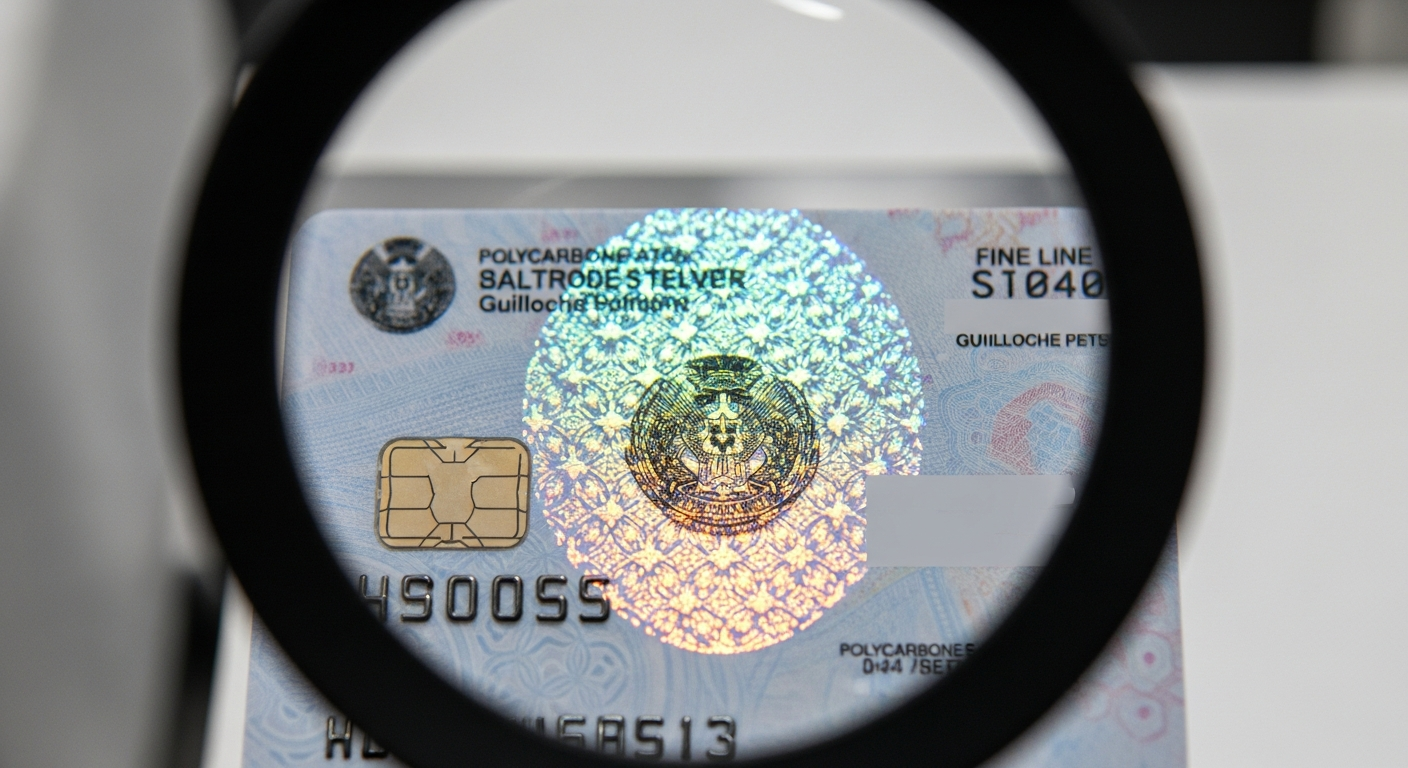
Across the African continent, governments are investing in smart card-based identity systems at an unprecedented scale. Driven by the twin imperatives of improving public service delivery and strengthening national security, these programmes represent some of the largest card deployments in the world — involving tens of millions of cards, complex biometric enrolment processes, and sophisticated card technology that must function reliably in environments ranging from air-conditioned government offices to rural registration centres without reliable electricity.
South Africa's Smart ID Card
South Africa's Department of Home Affairs launched its Smart ID Card programme in 2013, replacing the green-barcode ID book that had served the nation since 1986. The new card is a polycarbonate document with multiple security features including laser-engraved personal data, a contact chip storing biometric information (fingerprints and a facial photograph), and machine-readable text compliant with ICAO standards for travel documents.
The programme's scale is formidable — South Africa has over 40 million citizens eligible for the Smart ID Card, and the rollout has required the establishment of enrolment centres across the country, each equipped with fingerprint scanners, digital cameras, and card issuance systems. The experience has provided valuable lessons for other African nations planning similar programmes, particularly around the challenges of biometric enrolment quality, the logistics of card distribution to remote areas, and the importance of public communication campaigns to drive adoption.
Nigeria's National Identity Management
Nigeria's National Identity Management Commission (NIMC) has been executing one of Africa's most ambitious identity programmes. The Nigerian National Identity Card, based on a smart card platform with both contact and contactless interfaces, is designed to serve as a multipurpose credential — not just an identity document but also a payment instrument and a platform for accessing government services.
The programme's partnership with Mastercard, which enabled the card to function as a prepaid payment card on the Mastercard network, represented a groundbreaking convergence of national identity and financial services. For millions of Nigerians without bank accounts, the ability to receive government payments directly onto their national ID card offered a practical pathway to financial inclusion.
East African Developments
Kenya's Huduma Namba programme aims to create a single, unified identity number for every Kenyan citizen and resident, supported by a smart card that consolidates multiple identity documents — national ID, KRA PIN, NHIF number, and NSSF number — into one credential. The programme has faced legal challenges related to data privacy concerns, highlighting the tension between the efficiency benefits of consolidated identity systems and the civil liberties implications of centralised biometric databases.
Rwanda, often cited as a leader in African digital governance, has implemented a smart national ID card system that serves as the foundation for its e-government services. The card's integration with Rwanda's irembo (government services portal) platform enables citizens to access services ranging from land registration to business licensing using their smart ID as authentication.
Voter Registration and Election Cards
Electoral integrity is a powerful driver of smart card adoption across Africa. Many nations have invested in biometric voter registration systems that issue smart cards to registered voters, using fingerprint or facial recognition at polling stations to prevent multiple voting and impersonation fraud. Ghana's biometric voter registration, implemented for the 2012 general election, was one of the continent's pioneering deployments and demonstrated both the potential and the pitfalls of technology-dependent election systems.
The card manufacturing requirements for electoral programmes are distinctive. Production volumes are enormous — an entire nation's adult population may need to be carded within a compressed timeframe. The cards must incorporate robust anti-counterfeiting features to prevent fraud, yet they must also be cost-effective given the limited budgets of many African electoral commissions.
Social Grant Distribution
Smart cards play a critical role in social protection programmes across Africa. South Africa's South African Social Security Agency (SASSA) distributes grants to over 18 million beneficiaries, many of whom receive their payments through SASSA-branded payment cards. The programme has faced controversy — most notably the 2017 Constitutional Court challenge regarding the contract with Cash Paymaster Services — but its scale demonstrates the central role that card technology plays in social welfare delivery.
Similar card-based social protection programmes operate across the continent, from Ethiopia's Productive Safety Net Programme to Nigeria's National Social Investment Programme. In each case, the smart card serves as a secure credential that links a beneficiary's identity to their payment entitlement, reducing fraud and ensuring that grants reach their intended recipients.
Technical Requirements for Government Cards
Government ID cards must meet exacting technical standards. The card substrate — typically polycarbonate rather than PVC for durability and security — must withstand a ten-year lifecycle in harsh conditions. The chip must store biometric templates securely, supporting cryptographic protocols that prevent unauthorised access to personal data. The card's physical security features — holograms, optically variable inks, laser engraving, UV-fluorescent printing — must make counterfeiting prohibitively difficult.
For card manufacturers, government ID programmes represent high-value, long-duration engagements that demand the highest levels of production quality, security clearance, and supply chain reliability. These are programmes where failure is not merely a commercial inconvenience — it is a matter of national importance.