
Imagine tapping your payment card at a terminal and having it authenticate you not by a PIN you might forget or a signature you could forge, but by your fingerprint — directly on the card itself. This is the promise of biometric payment cards, a technology that has moved from concept to commercial pilot and is poised to reshape cardholder verification across the global payment industry.
How It Works
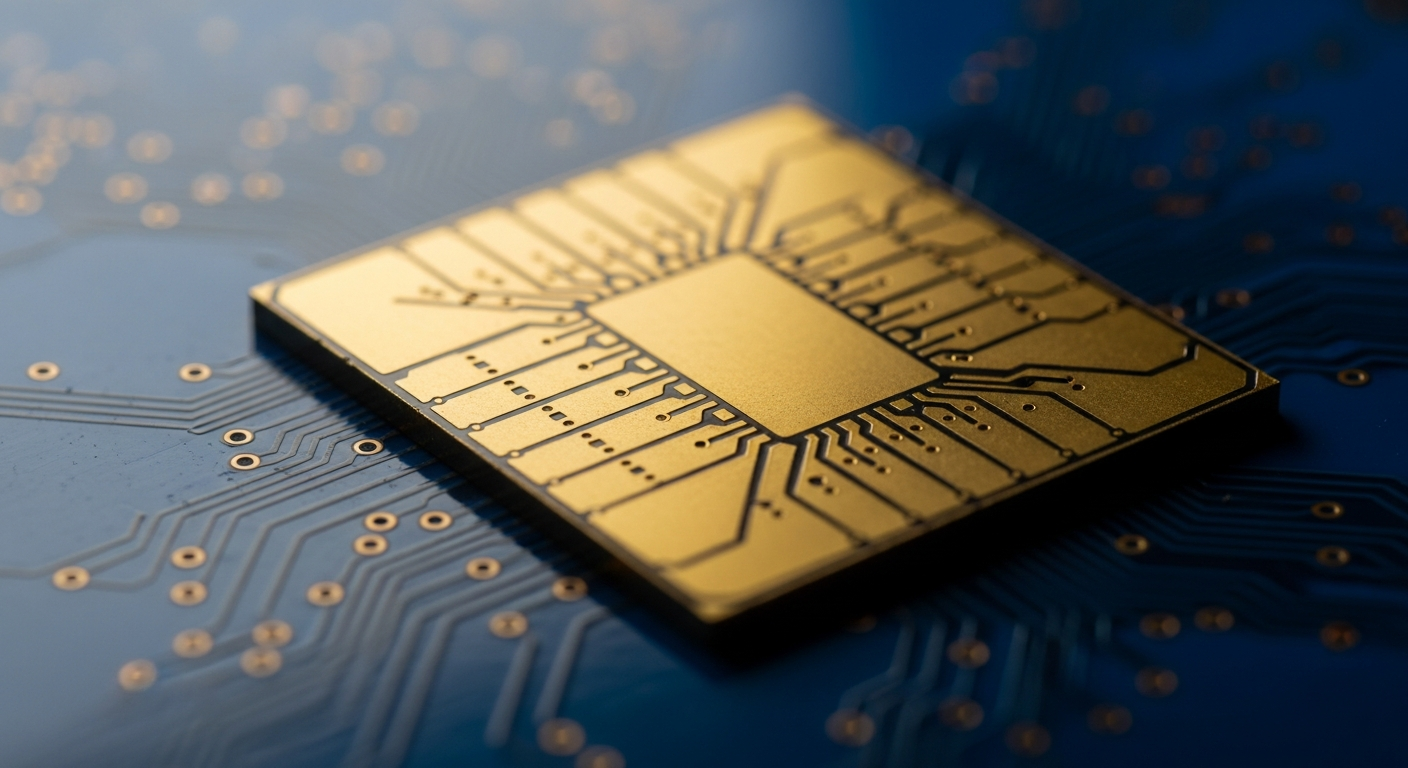
A biometric payment card integrates a miniature fingerprint sensor, a biometric matching processor, and a secure element into the standard card form factor. The sensor — typically a capacitive or ultrasonic scanner measuring roughly 12 by 12 millimetres — is embedded in the card body, with its surface flush with the card's face. When the cardholder places their finger on the sensor during a payment transaction, the fingerprint is captured, processed, and compared against a stored template entirely within the card.
Critically, the biometric matching happens on the card, not on an external server. The fingerprint template never leaves the card's secure element, eliminating the privacy concerns associated with centralised biometric databases. If the match is successful, the card completes the payment transaction as though a correct PIN had been entered. If the match fails, the transaction is declined — the card effectively becomes useless to anyone other than its enrolled owner.
The Enrolment Process
Before the card can authenticate its owner, the owner's fingerprint must be enrolled — that is, captured and stored as a template on the card's secure element. Several enrolment methods have been developed. The most user-friendly approach uses self-enrolment: the cardholder receives their card with instructions to place their finger on the sensor multiple times (typically 10 to 15 placements), building up a template through repeated captures. Some banks provide a small USB enrolment device that powers the card during the enrolment process, while others enable enrolment at the bank branch using a dedicated reader.
The enrolment process is a critical usability hurdle. If enrolment is too complex or too time-consuming, adoption will suffer. The industry is converging on self-enrolment at home as the preferred method, though the technology to enable this without an external power source (the card's battery or harvested power must sustain the sensor during multiple captures) remains a technical challenge.
Pilot Programmes and Early Deployment
Biometric payment cards have been piloted by several major issuers and payment networks. Mastercard has been particularly active, partnering with card manufacturers Thales and IDEMIA to conduct pilots in South Africa, Mexico, Bulgaria, and several Asian markets. In South Africa, a pilot with Pick n Pay demonstrated the technology in a real retail environment, with selected customers using biometric cards for everyday grocery purchases.
Visa has also invested in biometric card development, working with technology partners including Fingerprint Cards (a Swedish biometric sensor manufacturer) and Zwipe (a Norwegian biometric card company). Multiple banks across Europe, Asia, and Africa have conducted or announced biometric card trials.
The early results from pilots are encouraging. Transaction success rates for biometric verification are comparable to PIN entry, and consumer feedback has been overwhelmingly positive — users report that fingerprint verification feels faster, more natural, and more secure than remembering and entering a PIN.
Security Benefits
The security advantages of biometric authentication over PIN-based verification are substantial. A PIN can be observed (shoulder surfing), guessed, or coerced. A fingerprint is inherently personal and cannot be transferred to another individual. For vulnerable populations — the elderly, those with cognitive impairments, or those in environments where PIN compromise is a risk — biometric authentication provides a more robust form of identity verification.
Biometric cards also raise the contactless transaction limit potential. One of the reasons contactless transactions are subject to floor limits is the absence of cardholder verification — anyone who possesses the card can tap it. A biometric card solves this problem: every transaction, regardless of value, is authenticated by the cardholder's fingerprint, enabling contactless payments above the current floor limits without compromising security.
Cost and Manufacturing Considerations
Biometric payment cards are currently significantly more expensive than standard dual-interface cards. The fingerprint sensor, the biometric processing chip, and the thin-film battery or energy harvesting system that powers these components add substantial material and manufacturing cost. Current estimates place the unit cost of a biometric card at several times the cost of a standard dual-interface card.
This cost premium limits biometric cards, in the near term, to premium banking products where the additional cost can be absorbed as a brand differentiation investment. However, the cost trajectory is downward — as sensor volumes increase and manufacturing processes mature, the price premium is expected to narrow significantly over the coming years.
The African Opportunity
Africa has a unique relationship with biometric technology. The continent has deployed biometric systems at scale for national identity, voter registration, and financial inclusion programmes, creating a population that is broadly familiar and comfortable with fingerprint-based identification. This cultural acceptance of biometrics may accelerate the adoption of biometric payment cards in Africa relative to markets where biometric scepticism is more pronounced.
Furthermore, the security challenges in certain African environments — high rates of PIN compromise, card theft, and social engineering — make the case for biometric cardholder verification particularly compelling. A biometric card that becomes useless when separated from its enrolled owner addresses a genuine security need in the African context.
At Cardzgroup, we are actively monitoring biometric card technology developments and engaging with sensor and chip suppliers to ensure that we are prepared to manufacture biometric cards at scale when the market demand and price point reach commercial viability. The next frontier is approaching faster than many expect.